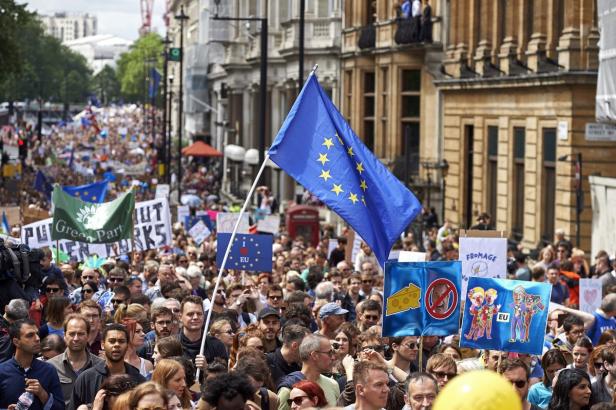
Rund 40.000 Menschen nahmen an einem Protestmarsch gegen den EU-Austritt Großbritanniens in London teil.
02.07.16, 15:59
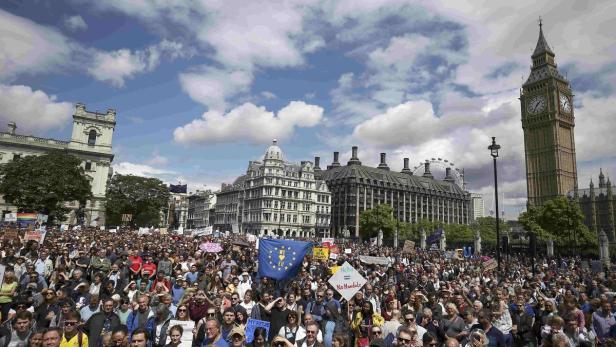
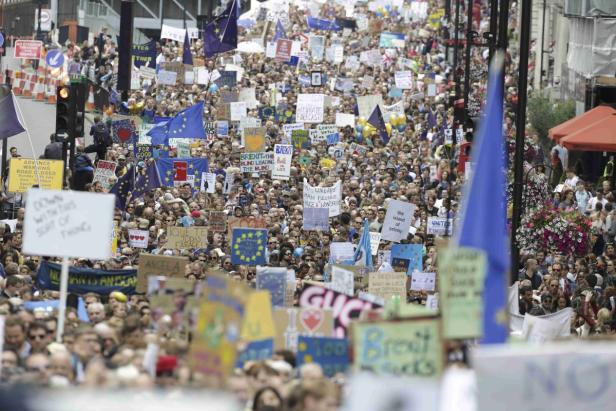
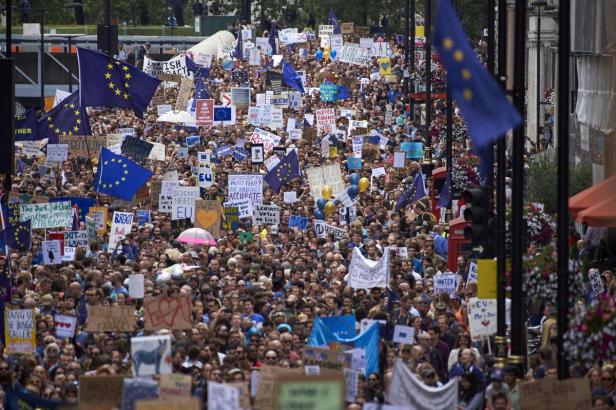
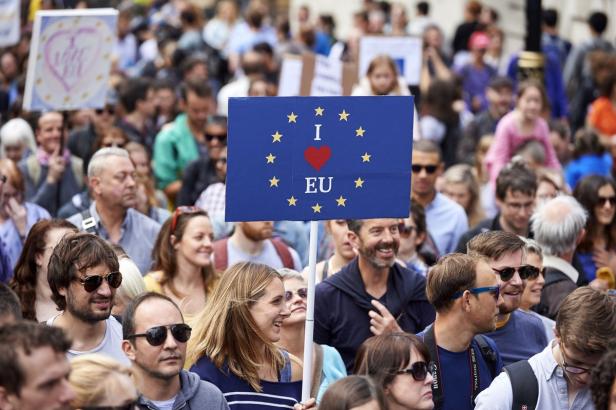
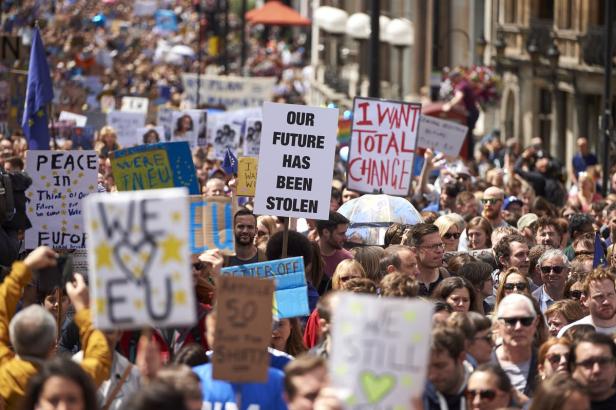
Zehntausende Demonstranten haben in London gegen das britische Brexit-Votum protestiert. Die zumeist jungen Leute trugen bei ihrem Marsch durch die Innenstadt am Samstag Europaflaggen mit sich und riefen "Ich liebe die EU". Der Sender BBC sprach von schätzungsweise 40.000 Teilnehmern.
People hold banners during a demonstration against Britain's decision to leave the European Union, in central London, Britain July 2, 2016. Britain voted to leave the European Union in the EU Brexit referendum. REUTERS/Paul Hackett
Die Veranstalter fordern unter anderem, das britische Parlament solle das Votum des EU-Referendums aus der vergangenen Woche aufheben. Die Zukunft Großbritanniens liege in der Europäischen Union (EU). Zugleich beschäftigten sich Konservative und die Labour-Partei weiterhin mit Personalfragen. Königin Elizabeth II. rief zu Ruhe und Besonnenheit in schwierigen Zeiten auf.
Hoffnung auf Reißleine
"Ich bin zutiefst verunsichert über meine Zukunft", sagte ein 25-Jähriger Demonstrant aus Hertfordshire. "Ich akzeptiere das Ergebnis, aber das hier soll zeigen, dass wir es nicht stillschweigend hinnehmen." Dagegen hoffen andere darauf, noch die Reißleine ziehen zu können. "Ich denke, die 'Leave'-Kampagne hat die Menschen in die Irre geführt", sagte die 37-jährige Demonstrantin Casey, die gelbe und blaue Blumen - die Farben der EU-Flagge - im Haar trug. "Ich möchte die EU nicht verlassen." Auch der in den EU-Farben gekleidete Demonstrant David sagte: "Wir können noch etwas tun, solange Artikel 50 noch nicht aktiviert ist."
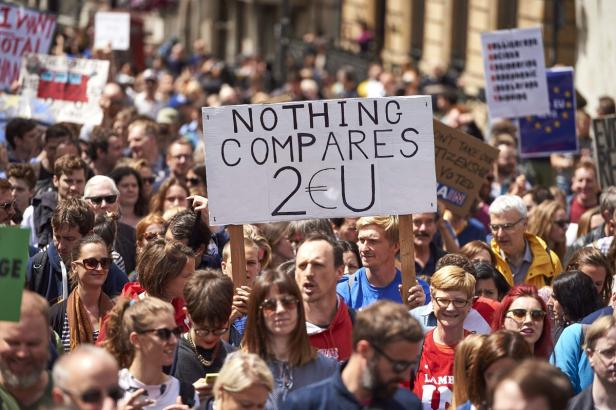
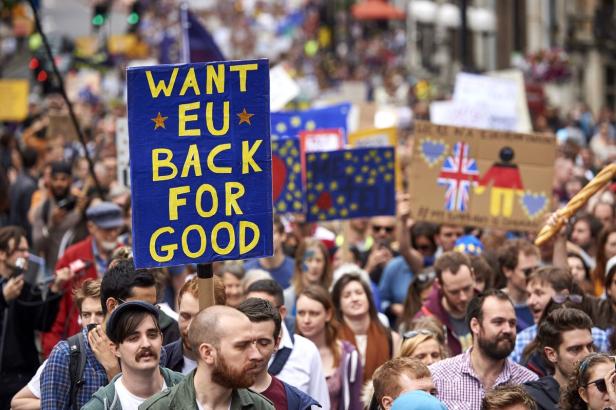
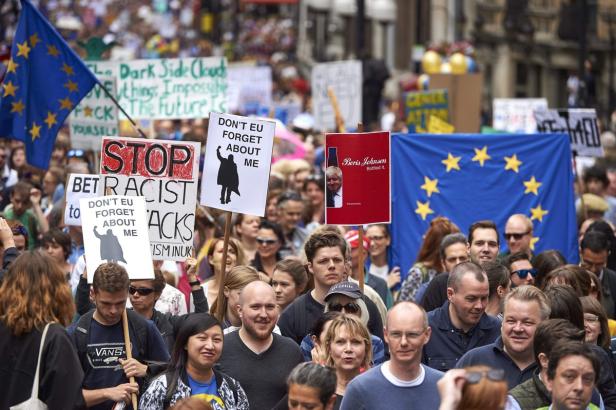
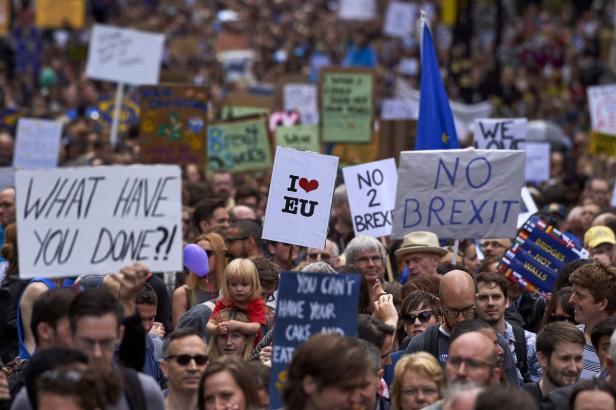
People hold up pro-Europe placards as thousands of protesters take part in a March for Europe, through the centre of London on July 2, 2016, to protest against Britain's vote to leave the EU, which has plunged the government into political turmoil and left the country deeply polarised.
Protesters from a variety of movements march from Park Lane to Parliament Square to show solidarity with those looking to create a more positive, inclusive kinder Britain in Europe. / AFP PHOTO / Niklas HALLE'N
Artikel 50 der EU-Verträge regelt den Austritt eines Landes aus der EU. Damit er zum Tragen kommt, muss die britische Regierung aber erst einmal offiziell einen Austrittsantrag stellen. Wann das nach dem historischen Brexit-Referendum vom 23. Juni geschieht, ist derzeit noch unklar. Knapp 52 Prozent der Briten hatten bei der Volksabstimmung für einen EU-Austritt ihres Landes gestimmt und damit den gesamten Kontinent geschockt.
Zweifel an Petition
Inzwischen haben rund vier Millionen Briten eine Online-Petition für ein zweites Referendum unterschrieben. Allerdings hat das zuständige Komitee im Unterhaus Zweifel geäußert, ob alle Unterschriften gültig seien. Die derzeit entscheidenden Politiker in London betonen, es gebe kein Zurück. Das Votum von 17 Millionen Briten (rund 52 Prozent) für einen Austritt aus der EU müsse umgesetzt werden.
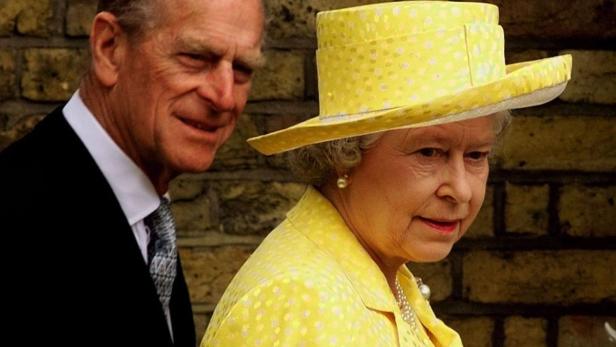
Ohne das Thema Brexit beim Namen zu nennen, betonte die Queen bei der feierlichen Eröffnung des neugewählten schottischen Parlaments in Edinburgh die Notwendigkeit, "ruhig und gefasst zu bleiben". Gerade in Zeiten schneller Entwicklungen brauche es "genügend Raum für ruhiges Denken und Überlegen". Das Staatsoberhaupt des Vereinigten Königreichs hält sich traditionell aus der Tagespolitik heraus.
Nachfolger von Cameron gesucht
Die Konservativen suchen unterdessen weiter einen Nachfolger für Premierminister David Cameron, der nach seiner Niederlage beim Referendum für die nächsten Monate seinen Rückzug angekündigt hatte. Innenministerin Theresa May gilt weiter als Favoritin.
Derweil steigt der Druck auf Labour-Oppositionschef Jeremy Corbyn zurückzutreten. Laut BBC sind Parteigranden dabei, dem 67-Jährigen einen ehrenvollen Abgang ohne Gesichtsverlust zu ermöglichen. Trotz eines Misstrauensvotums der Labour-Abgeordneten will Corbyn im Amt bleiben. Sein Argument: Die Parteibasis hat ihn erst im September mit rund 60 Prozent gewählt, er wolle sie nicht enttäuschen. Kritiker fürchten, mit Corbyn an der Spitze künftige Wahlen zu verlieren.
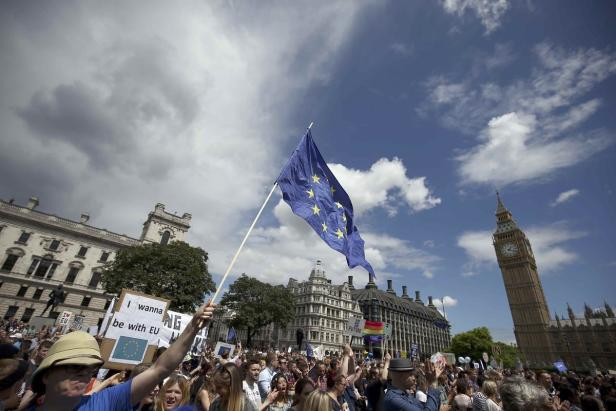
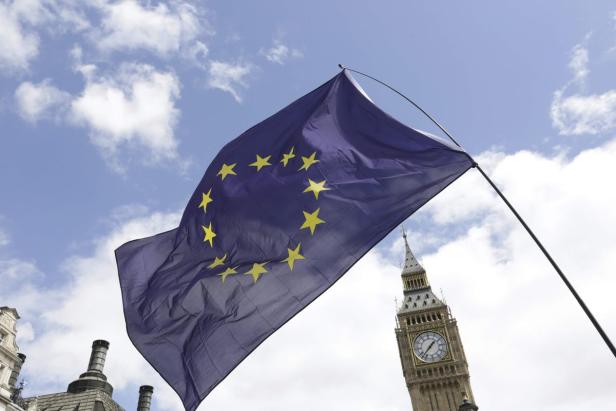
A man holds a European Union flag in Parliament Square during a 'March for Europe' demonstration against Britain's decision to leave the European Union, central London, Britain July 2, 2016. Britain voted to leave the European Union in the EU Brexit referendum. REUTERS/Neil Hall
People hold up pro-Europe placards as thousands of protesters take part in a March for Europe, through the centre of London on July 2, 2016, to protest against Britain's vote to leave the EU, which has plunged the government into political turmoil and left the country deeply polarised.
Protesters from a variety of movements march from Park Lane to Parliament Square to show solidarity with those looking to create a more positive, inclusive kinder Britain in Europe. / AFP PHOTO / Niklas HALLE'N
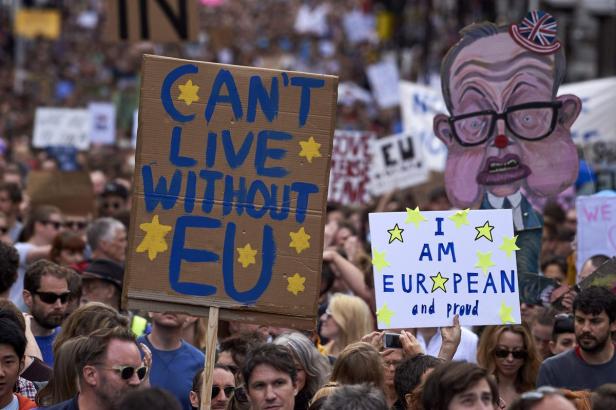
People hold up pro-Europe placards as thousands of protesters take part in a March for Europe, through the centre of London on July 2, 2016, to protest against Britain's vote to leave the EU, which has plunged the government into political turmoil and left the country deeply polarised.
Protesters from a variety of movements march from Park Lane to Parliament Square to show solidarity with those looking to create a more positive, inclusive kinder Britain in Europe. / AFP PHOTO / Niklas HALLE'N
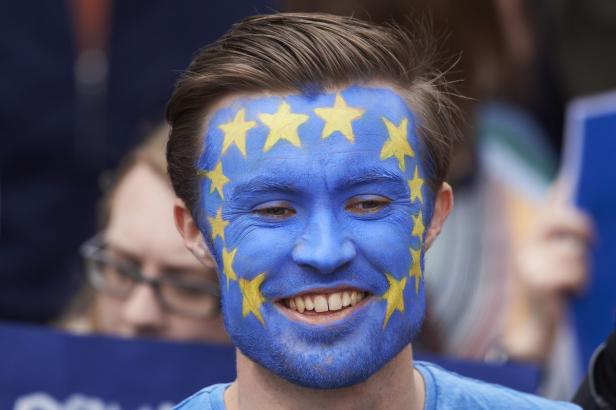
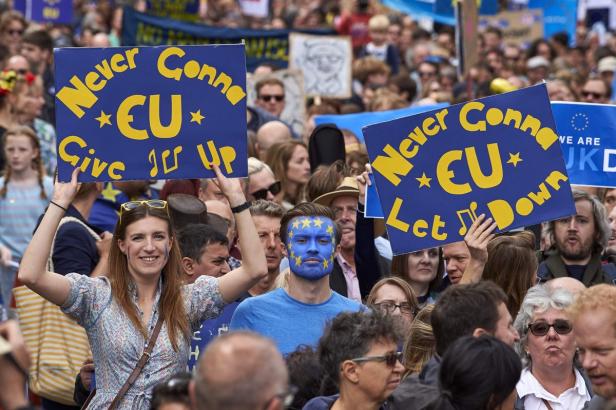
A man with his face painted as a European flag is pictured as thousands of protesters take part in a March for Europe, through the centre of London on July 2, 2016, to protest against Britain's vote to leave the EU, which has plunged the government into political turmoil and left the country deeply polarised.
Protesters from a variety of movements march from Park Lane to Parliament Square to show solidarity with those looking to create a more positive, inclusive kinder Britain in Europe. / AFP PHOTO / Niklas HALLE'N
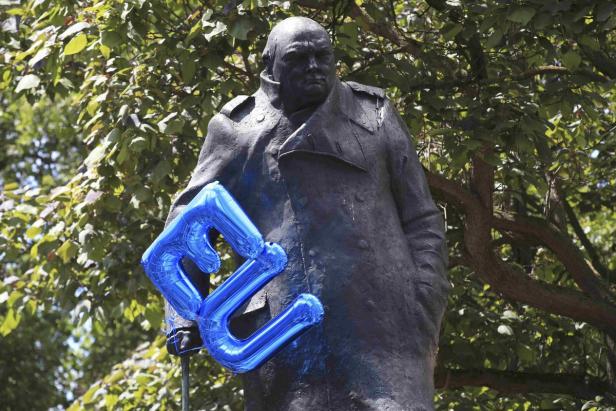
An EU balloon is tied to the Winston Churchill statue in Parliament Square during a 'March for Europe' demonstration against Britain's decision to leave the European Union, central London, Britain July 2, 2016. Britain voted to leave the European Union in the EU Brexit referendum. REUTERS/Paul Hackett
Protestors walk into Parliament Square during a 'March for Europe' demonstration against Britain's decision to leave the European Union, central London, Britain July 2, 2016. Britain voted to leave the European Union in the EU Brexit referendum. REUTERS/Paul Hackett
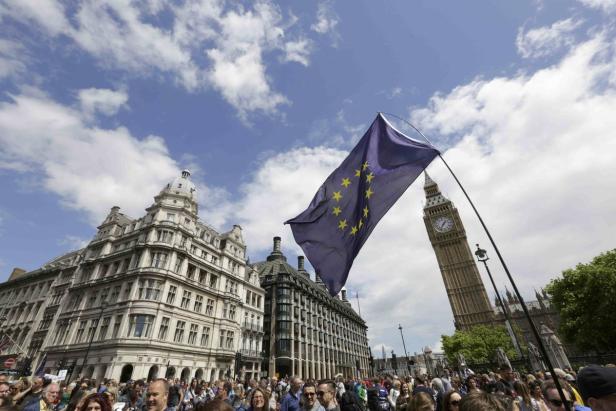
A European Union flag is held in front of the Big Ben clock tower in Parliament Square during a 'March for Europe' demonstration against Britain's decision to leave the European Union, central London, Britain July 2, 2016. Britain voted to leave the European Union in the EU Brexit referendum. REUTERS/Paul Hackett
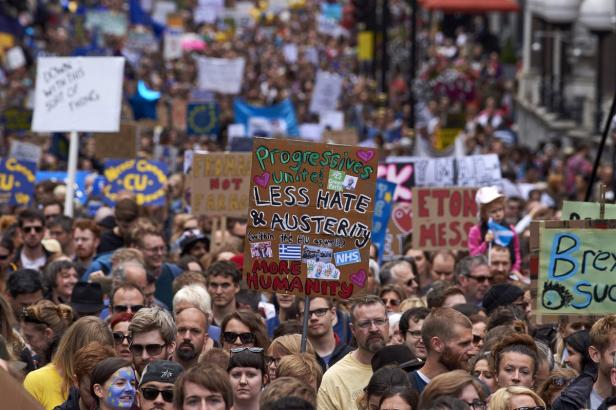
People hold up pro-Europe placards as thousands of protesters take part in a March for Europe, through the centre of London on July 2, 2016, to protest against Britain's vote to leave the EU, which has plunged the government into political turmoil and left the country deeply polarised.
Protesters from a variety of movements march from Park Lane to Parliament Square to show solidarity with those looking to create a more positive, inclusive kinder Britain in Europe. / AFP PHOTO / Niklas HALLE'N
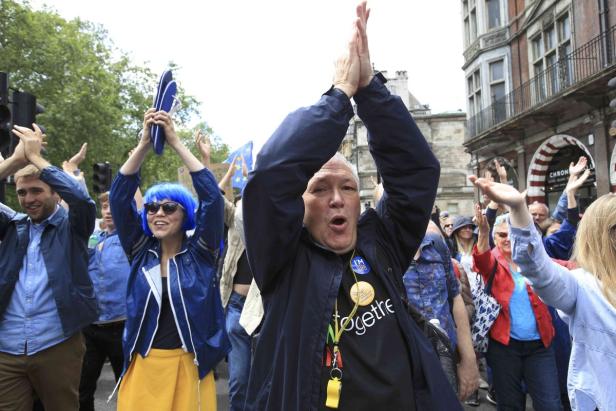
People shout during a 'March for Europe' demonstration against Britain's decision to leave the European Union, central London, Britain July 2, 2016. Britain voted to leave the European Union in the EU Brexit referendum. REUTERS/Paul Hackett
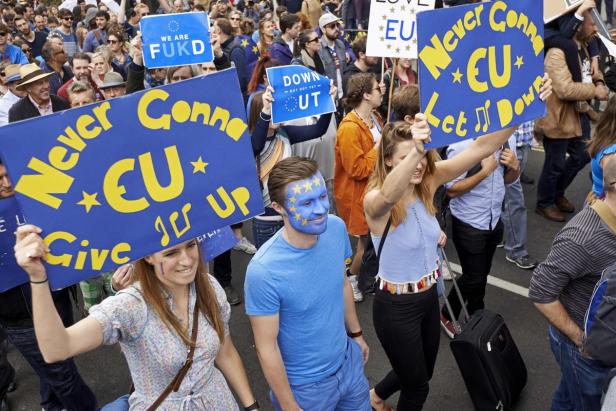
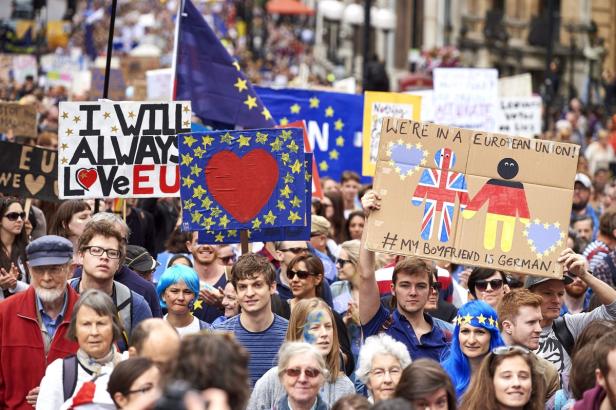
People hold up pro-Europe placards and European flags as thousands of protesters take part in a March for Europe, through the centre of London on July 2, 2016, to protest against Britain's vote to leave the EU, which has plunged the government into political turmoil and left the country deeply polarised.
Protesters from a variety of movements march from Park Lane to Parliament Square to show solidarity with those looking to create a more positive, inclusive kinder Britain in Europe. / AFP PHOTO / Niklas HALLE'N
People hold up pro-Europe placards and European flags as thousands of protesters take part in a March for Europe, through the centre of London on July 2, 2016, to protest against Britain's vote to leave the EU, which has plunged the government into political turmoil and left the country deeply polarised.
Protesters from a variety of movements march from Park Lane to Parliament Square to show solidarity with those looking to create a more positive, inclusive kinder Britain in Europe. / AFP PHOTO / Niklas HALLE'N
People hold up pro-Europe placards and European flags as thousands of protesters take part in a March for Europe, through the centre of London on July 2, 2016, to protest against Britain's vote to leave the EU, which has plunged the government into political turmoil and left the country deeply polarised.
Protesters from a variety of movements march from Park Lane to Parliament Square to show solidarity with those looking to create a more positive, inclusive kinder Britain in Europe. / AFP PHOTO / Niklas HALLE'N
People hold up pro-Europe placards and European flags as thousands of protesters take part in a March for Europe, through the centre of London on July 2, 2016, to protest against Britain's vote to leave the EU, which has plunged the government into political turmoil and left the country deeply polarised.
Protesters from a variety of movements march from Park Lane to Parliament Square to show solidarity with those looking to create a more positive, inclusive kinder Britain in Europe. / AFP PHOTO / Niklas HALLE'N
People hold up pro-Europe placards as thousands of protesters take part in a March for Europe, through the centre of London on July 2, 2016, to protest against Britain's vote to leave the EU, which has plunged the government into political turmoil and left the country deeply polarised.
Protesters from a variety of movements march from Park Lane to Parliament Square to show solidarity with those looking to create a more positive, inclusive kinder Britain in Europe. / AFP PHOTO / Niklas HALLE'N
People hold up pro-Europe placards as thousands of protesters take part in a March for Europe, through the centre of London on July 2, 2016, to protest against Britain's vote to leave the EU, which has plunged the government into political turmoil and left the country deeply polarised.
Protesters from a variety of movements march from Park Lane to Parliament Square to show solidarity with those looking to create a more positive, inclusive kinder Britain in Europe. / AFP PHOTO / Niklas HALLE'N
People hold up pro-Europe placards as thousands of protesters take part in a March for Europe, through the centre of London on July 2, 2016, to protest against Britain's vote to leave the EU, which has plunged the government into political turmoil and left the country deeply polarised.
Protesters from a variety of movements march from Park Lane to Parliament Square to show solidarity with those looking to create a more positive, inclusive kinder Britain in Europe. / AFP PHOTO / Niklas HALLE'N
A woman holds up a pro-Europe placard as thousands of protesters take part in a March for Europe, through the centre of London on July 2, 2016, to protest against Britain's vote to leave the EU, which has plunged the government into political turmoil and left the country deeply polarised.
Protesters from a variety of movements march from Park Lane to Parliament Square to show solidarity with those looking to create a more positive, inclusive kinder Britain in Europe. / AFP PHOTO / Niklas HALLE'N
People hold up pro-Europe placards as thousands of protesters take part in a March for Europe, through the centre of London on July 2, 2016, to protest against Britain's vote to leave the EU, which has plunged the government into political turmoil and left the country deeply polarised.
Protesters from a variety of movements march from Park Lane to Parliament Square to show solidarity with those looking to create a more positive, inclusive kinder Britain in Europe. / AFP PHOTO / Niklas HALLE'N
Kommentare