Python-Plage im Sunshine State
Ausgesetzte Riesenschlangen vermehren sich seit Jahren explosionsartig und haben bereits alle Kaninchen der Everglades verspeist.
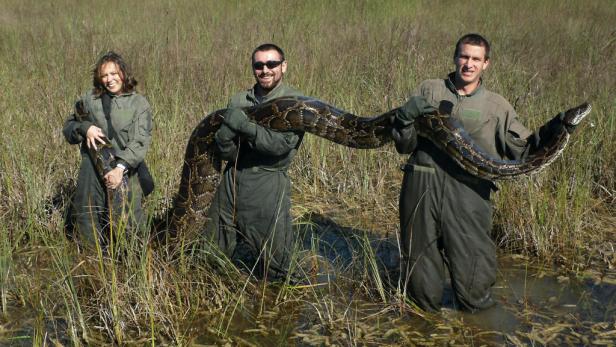
© dapd(c) AP
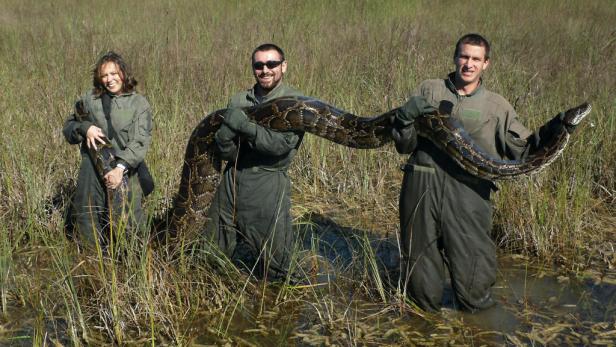
© dapd(c) AP
dapdIn this November 14, 2009 photo provided by the University of Florida, University of Florida researchers hold a 162-pound Burmese python captured in Everglades National Park, Fla. Therese Walters, left, Alex Wolf and Michael R. Rochford, right, are ho
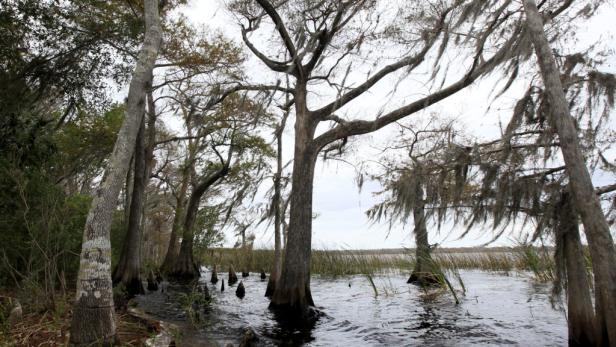
© dapd(c) AP
dapdIn this Nov. 18, 2011 photo, a section of the wetland area of Kissimmee, Fla., which straddles the headwaters of the Everglades ecosystem, is seen. Conservation programs and environmental regulations have been pared back significantly in many states t
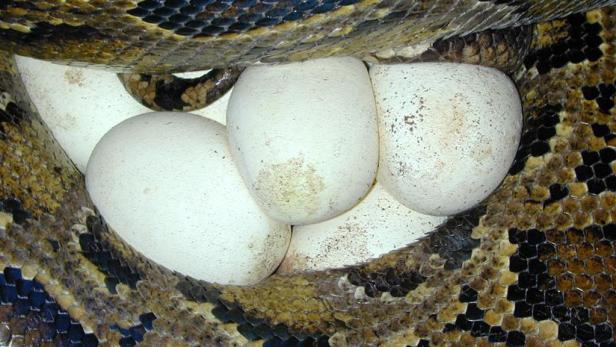
© Wikimedia Commons/User: Tigerpython
Tigerpython mit Nest.
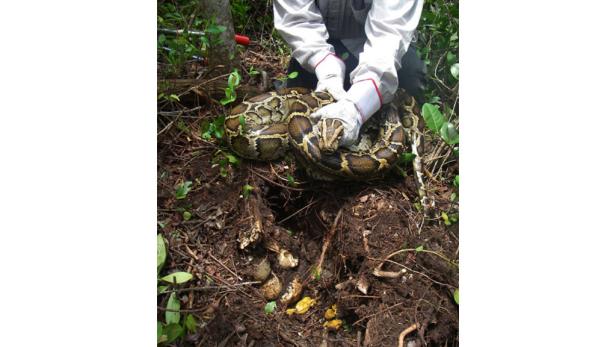
© dapd(c) AP
dapdIn this 2009 photo provided by the University of Florida a researcher holds a Burmese python near her nest in Everglades National Park, Fla. The National Academy of Science report released Monday, Jan. 30, 2012, indicates that the proliferation of pyt
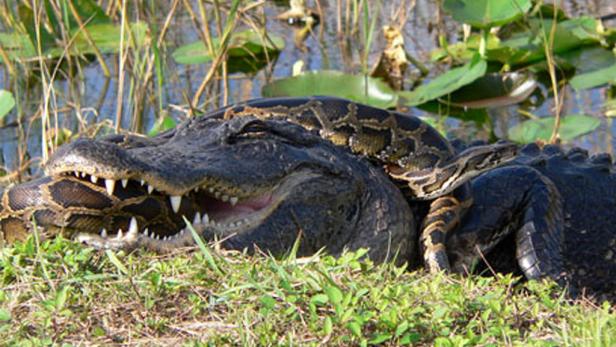
© dapd(c) AP
dapdIn this 2009 photo provided by the National Park Service, a Burmese python is wrapped around an American alligator in Everglades National Park, Fla. The National Academy of Science report released Monday, Jan. 30, 2012, indicates that the proliferatio
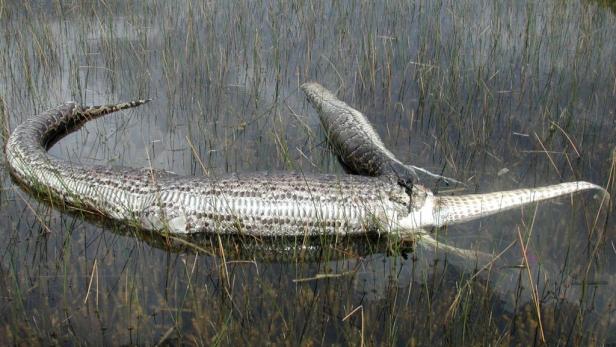
© REUTERS
REUTERSA handout photo released on October 6, 2005 by Everglades National Park shows a dead Burmese python which had swallowed an American alligator. The United States announced a ban on Burmese pythons on January 17, 2012 after years of unsuccessful effo
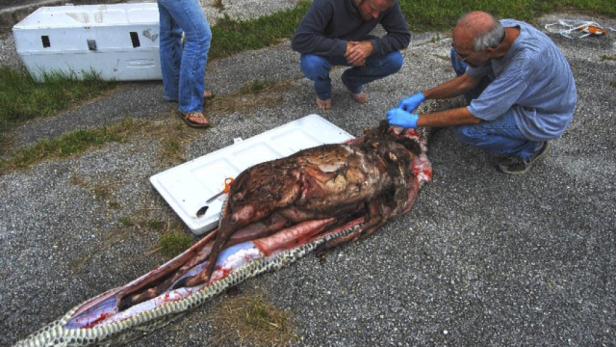
© dapd(c) AP
dapdIn this Thursday, Oct. 27, 2011 photo provided by the National Park Service, Everglades National Park wildlife biologists Mark Parry, left, and Skip Snow perform a necropsy on a Burmese Python that was captured and killed in Everglades National Park,
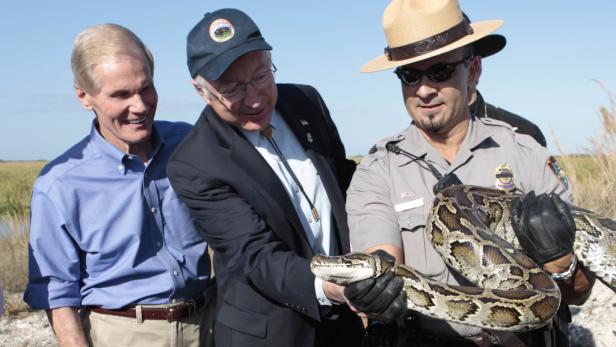
© dapd(c) AP
dapdIn this Jan. 17, 2012 file photo, Secretary of Interior Ken Salazar, center, and Sen. Bill Nelson, D-Fla., left, look at at 13-foot python held by National Park Service Supervisor Ranger Al Mercado in the Everglades, Fla. The National Academy of Scien
Kommentare